
5 Common Mistakes Beginners Make When Using Walking Poles

Updated: Mar 24

Many people think walking poles are simply “something you hold while walking.”But in reality, they are part of a full-body movement system that integrates upper-body propulsion, core stability, and lower-body gait.
Because of this, incorrect technique or improper use can not only reduce effectiveness, but also lead to discomfort in:
wrists
shoulders
lower back
Here are 5 common mistakes beginners make — and how to avoid them.
1️⃣ Holding the Poles Without Using Push & Pull
One of the most common mistakes is treating walking poles like:
trekking poles
canes
or just lightly tapping them on the ground
👉 The key difference is:
Are you actually using the Push & Pull motion?
Proper technique involves:
natural arm swing
pushing backward to generate propulsion
extending the movement behind your body
👉 This is what activates your back, shoulders, and core — turning walking into a full-body activity.
2️⃣ Overusing the Wrist Instead of the Arm
If you feel wrist discomfort after walking, it’s usually due to:
unnatural grip angles
excessive wrist bending
force concentrated in the hand instead of the arm
👉 The correct concept is:
Power should come from the arm — not the wrist
To fix this:
choose ergonomic handle designs
keep your wrist in a neutral position
let your arm drive the motion
👉 A good design allows you to “walk with your arms,” not “support yourself with your wrists.”
3️⃣ Focusing on the Arms but Ignoring the Legs
Some beginners focus too much on arm movement and neglect lower-body rhythm, resulting in:
shorter steps
forward-leaning posture
awkward coordination
👉 The correct approach:
Coordinate arms and legs in a natural, alternating rhythm
arms guide the movement
legs maintain forward stability
stride length becomes more natural
👉 When upper and lower body move together, walking becomes smooth and efficient.
4️⃣ Incorrect Pole Height or Ground Contact
Improper setup can directly affect posture and efficiency:
too short → forward lean, shoulder tension
too long → raised arms, restricted motion
👉 Basic guideline:
elbows should be naturally bent at about 90 degrees
Also consider:
👉 Different surfaces require different contact styles
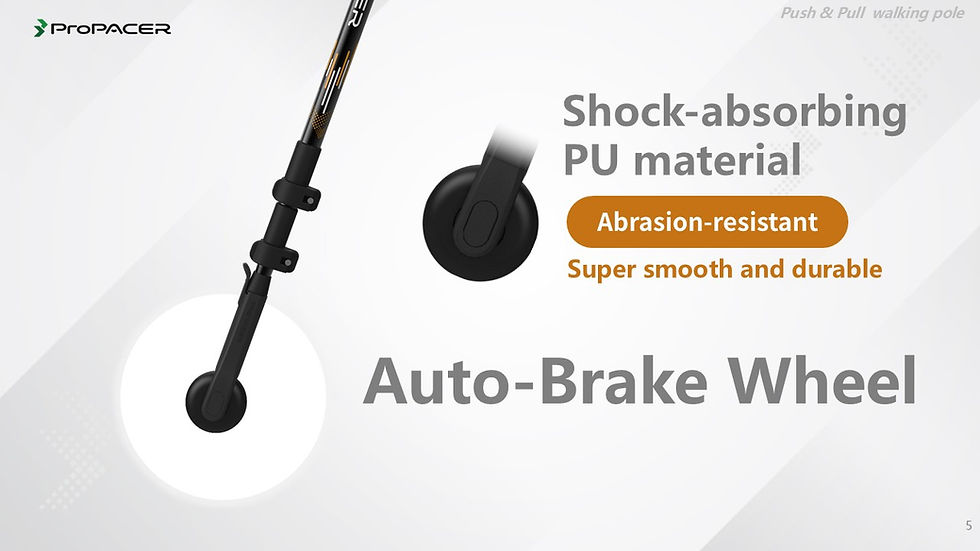
paved roads → stable or rolling contact
outdoor terrain → standard pole tips
👉 The right setup makes walking smoother and more stable.
5️⃣ Walking Too Fast Too Soon
Many people assume:
👉 faster walking = better results
But going too fast can lead to:
poor posture
loss of coordination
increased strain on shoulders and lower back
👉 Beginners should focus on:
correct form
consistent rhythm
relaxed breathing
👉 Once the movement becomes natural, speed will improve automatically.
For Beginners, the Key Is Doing It Right
Most people struggle not because they lack effort,but because they start with the wrong approach.
A well-designed walking pole can help you:
learn correct movement faster
reduce the learning curve
improve stability and comfort
For example:
✔ guided Push & Pull motion
✔ ergonomic handle design
✔ stable ground contact for different environments
👉 Making it easier to get it right from day one.
Walking Better Matters More Than Walking More
What matters is not how far you walk,but:
👉 how you walk
By avoiding these 5 common mistakes, you’ll notice:
👉 the same walking movement can feel completely different
The Same Steps. A Completely Different Result.
Start right —and walking can become your most natural, sustainable form of exercise.


Comments