
Walking poles for beginners: how to choose and use them easily

Updated: Apr 20
What are the best walking poles for beginners?
The best walking poles for beginners are those that feel natural, stable, and easy to use from the first walk.

Instead of focusing on advanced techniques, beginners should look for walking poles that:
support natural walking rhythm
reduce coordination complexity
provide stable and consistent contact with the ground
Why walking poles feel difficult at the beginning
Many beginners think walking poles are hard to use, but the difficulty often comes from the design—not the user.
Traditional walking techniques require a sequence like:
👉 plant → push → lift → swing
This creates several challenges:
timing the pole movement
coordinating arms and legs
maintaining a steady rhythm
👉 This is why walking poles can feel unnatural at first.
A simpler way to start: reduce complexity
For beginners, the easiest way to learn is to simplify the movement.
Instead of focusing on technique, look for walking poles that allow:
smoother motion
continuous forward movement
minimal lifting
👉 The goal is not to control the poles—but to support your walking.
Walking poles without lifting: easier for beginners
One of the biggest differences in beginner-friendly walking poles is whether lifting is required.
Traditional approach:
👉 plant → push → lift
Simplified approach:
👉 push → continue → glide
This reduces:
coordination difficulty
learning time
mental effort
👉 making walking feel more intuitive from the start.
What beginners should look for in walking poles
1. Natural movement
Walking should feel like walking—not a technical exercise.
Choose poles that:
follow your natural rhythm
don’t force complex timing
feel comfortable immediately
2. Stability and balance
Beginners often benefit from extra support.
Look for poles that:
provide consistent ground contact
improve balance without abrupt stops
feel steady on paved surfaces
3. Smooth motion on paved roads
Most beginners walk on:
sidewalks
parks
urban paths
Poles designed for paved roads help by:
reducing friction
maintaining rhythm
avoiding jerky motion
Push & pull walking: a beginner-friendly approach
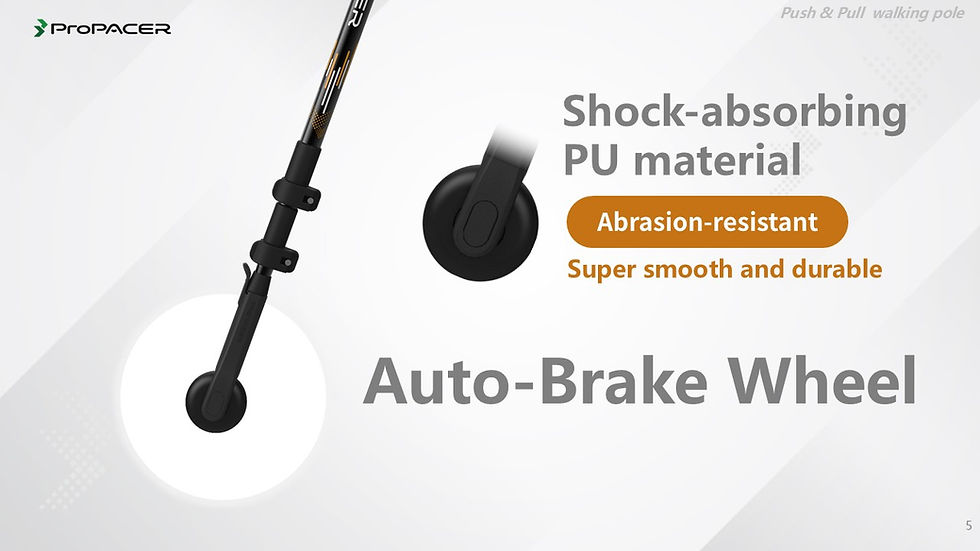
Some walking systems simplify movement further by focusing on push & pull walking.
Instead of lifting the poles, the motion emphasizes:
👉 push forward → continue movement
This allows beginners to:
learn faster
move more naturally
maintain a steady walking rhythm
👉 For many people, this feels more intuitive than traditional techniques.
How to start using walking poles (simple method)
If you’re just getting started, keep it simple:
Walk naturally first
Let your arms swing freely
Add the poles without forcing timing
Focus on smooth forward movement
👉 Avoid overthinking technique in the beginning.
Are walking poles worth it for beginners?
Yes, walking poles can be very helpful for beginners—if the movement feels natural and easy to maintain.
They can:
improve walking stability
reduce strain on joints
make walking more engaging
👉 But the key is choosing the right design.
Final takeaway
Walking poles don’t need to be complicated.
👉 If they feel difficult, the issue is often the movement system👉 If they feel natural, you’re using the right type
For beginners, simplicity, stability, and continuous motion matter more than technique.


Comments