
Why do walking poles feel unnatural?

Updated: Apr 20
Why do walking poles feel unnatural at first?
Walking poles often feel unnatural because traditional designs require a plant–push–lift motion that interrupts your natural walking rhythm.

Instead of moving continuously like normal walking, users must coordinate arm movement, pole placement, and lifting timing. For beginners, this creates a stop-and-go feeling rather than a smooth forward motion.
The real reason: walking poles change your natural rhythm
When walking without poles, your body naturally follows a simple pattern:
👉 step → swing → step → swing
However, many traditional walking poles introduce a different sequence:
👉 plant → push → lift → swing
This extra “lift” step breaks the flow of movement. On paved roads or sidewalks, this can feel especially unnatural because:
The surface is smooth and continuous
Your body expects uninterrupted motion
Repeated lifting creates small interruptions in rhythm
Why it feels more unnatural on paved roads
Walking poles were originally developed for outdoor terrain and Nordic-style training. On uneven ground, the “plant and lift” motion helps with:
Stability on slopes
Load support
Terrain adaptation
But on flat surfaces like:
sidewalks
asphalt roads
park paths
this same motion can feel inefficient.
👉 Instead of helping movement, it can create friction in your walking rhythm.
The coordination problem (especially for beginners)
Many first-time users struggle not because walking poles are difficult, but because:
👉 the movement is not intuitive
Common issues include:
Unsure when to plant the pole
Lifting too early or too late
Overthinking arm movement
Losing natural walking rhythm
This is why beginners often say:
👉 “It doesn’t feel natural.”
A simpler alternative: walking without lifting
Some modern walking pole designs focus on reducing complexity by allowing more continuous movement.
Instead of forcing a lift every step, these systems emphasize:
smoother ground contact
forward motion continuity
reduced coordination effort
👉 The goal is to make walking feel closer to natural movement, not more complicated.
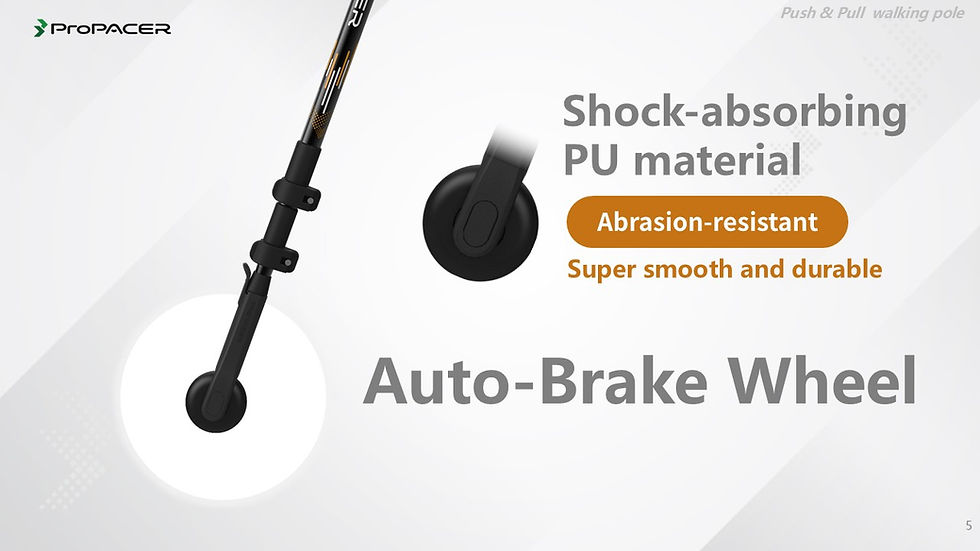
Push & Pull walking: a more natural walking motion
One example of simplified movement is push & pull walking.
Instead of a multi-step cycle, it focuses on:
👉 push forward → continue motion
This removes the need to consciously lift the poles, allowing:
more fluid walking rhythm
less interruption
easier learning curve
For many users, this feels more like:
👉 walking with support, not controlling equipment
So, are walking poles supposed to feel unnatural?
No. Walking poles are not meant to feel unnatural—but some designs can make them feel that way, especially at the beginning.
Once the movement becomes smoother and more intuitive, walking poles can:
improve rhythm
reduce strain
enhance walking efficiency
The key difference lies in:
👉 how the movement is designed
Final takeaway
Walking poles feel unnatural mainly because:
traditional techniques interrupt natural rhythm
lifting adds complexity
coordination takes time to learn
👉 Simpler, more continuous movement systems can make walking feel significantly more natural.


Comments