
Walking poles without lifting: is it possible?

Updated: Apr 20
Can you use walking poles without lifting them?
Yes, some walking pole designs allow you to walk without lifting the poles on every step.
While traditional techniques often involve a plant–push–lift motion, newer approaches focus on maintaining continuous contact with the ground, creating a smoother and more natural walking rhythm.

Why traditional walking poles require lifting
Most conventional walking poles are designed around a repeated cycle:
👉 plant → push → lift → swing
This method works well for:
uneven terrain
hiking trails
slope stability
However, it also means that every step requires a deliberate lift, which can:
interrupt walking rhythm
increase coordination effort
feel unnatural for beginners
The problem: lifting breaks continuous movement
When walking on flat surfaces like:
sidewalks
paved roads
park paths
your body naturally prefers continuous forward motion.
But lifting the pole introduces a pause in each cycle:
👉 push → stop → lift → reposition
Even if subtle, this repeated interruption can create:
a jerky walking feel
reduced efficiency
difficulty maintaining rhythm
What happens when you don’t lift the poles?
When walking poles stay in contact with the ground, the movement changes significantly.
Instead of a stop-and-go cycle, the motion becomes:
👉 push → glide → continue
This creates:
smoother forward momentum
more stable contact with the ground
less need for precise timing
👉 The result feels closer to natural walking.
Walking poles for paved roads: why continuous contact matters
On paved surfaces, continuous contact offers clear advantages:
No need to adjust for terrain changes
More consistent movement pattern
Reduced impact variation
This is why some walking pole designs are optimized specifically for:
👉 paved road walking👉 urban walking👉 long-distance fitness walking
Is walking without lifting easier for beginners?
Yes, walking poles that reduce or eliminate lifting are generally easier to learn.
Beginners often struggle with:
coordinating arm and leg movement
timing the lift correctly
maintaining rhythm
By removing the lifting step, walking becomes:
more intuitive
less technical
easier to maintain over time
A different approach: continuous walking systems
Some modern systems focus on simplifying movement by emphasizing:
continuous ground contact
forward motion instead of repeated resets
reduced coordination complexity
This approach shifts the experience from:
👉 controlling the poles
to:
👉 supporting natural walking movement
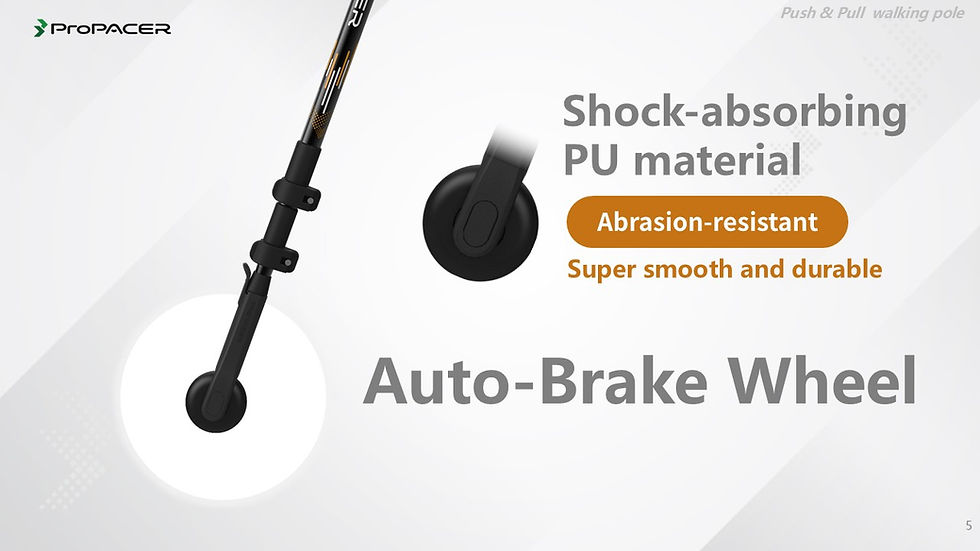
Push & pull walking without lifting
One example of this simplified approach is push & pull walking.
Instead of lifting the poles, the motion focuses on:
👉 push forward → maintain contact → continue
This creates:
a more fluid walking experience
less interruption in rhythm
easier adaptation for everyday walking
For many users, this feels more natural—especially on flat surfaces.
Are all walking poles designed this way?
No, not all walking poles support continuous contact without lifting.
Most traditional designs still rely on the lift cycle, especially those designed for:
Nordic walking techniques
hiking and trekking
technical terrain
If your primary use is:
👉 paved roads👉 sidewalks👉 daily walking
then choosing a design that supports smoother, continuous motion can make a noticeable difference.
Final takeaway
Walking poles do not always require lifting.
👉 Traditional designs rely on lifting👉 Newer approaches allow continuous contact
The key difference is how the movement is structured.
If walking feels unnatural or difficult, the issue is often not the user—but the motion design itself.


Comments